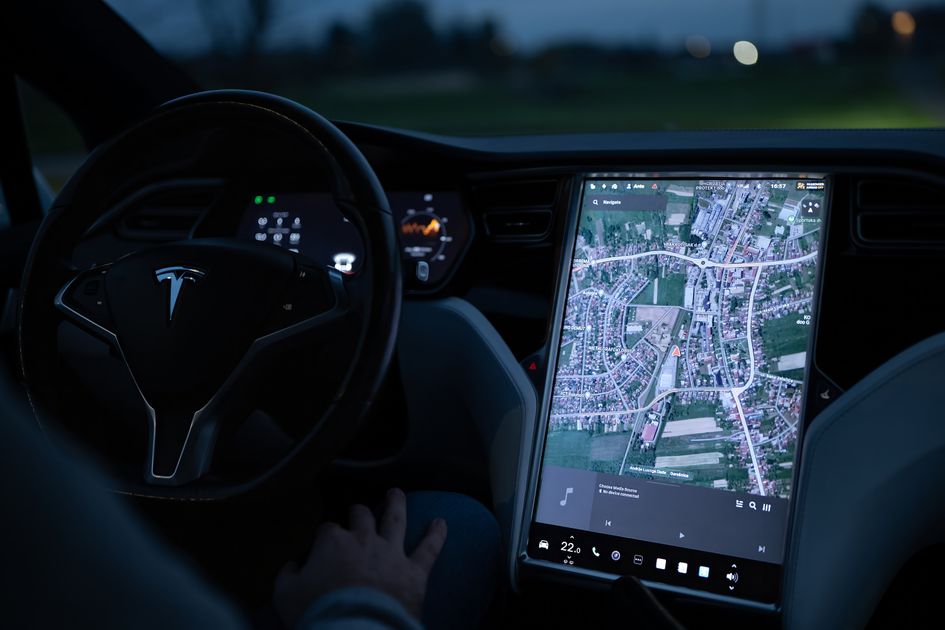
Texas officially rewrote the rules for autonomous vehicles today. Senate Bill 2807, signed by Governor Greg Abbott and effective May 28, 2026, establishes a formal state authorization framework for commercial autonomous vehicle operations—and critically, it explicitly permits vehicles with no steering wheel and no brake pedal to operate on public Texas roads.
For Tesla, which has been running a small Cybercab fleet in Austin and recently expanded to Dallas and Houston, the law removes a layer of legal ambiguity that has shadowed autonomous deployments across the country.
What SB 2807 Actually Does
The legislation requires any company operating autonomous vehicles commercially in Texas to obtain authorization from the Texas Department of Motor Vehicles (TxDMV). It also establishes the Automated Vehicle Regulation Advisory Committee (AVRAC) to assist with ongoing oversight and requires companies to file first-responder interaction plans with the Texas Department of Public Safety—detailing exactly how police and paramedics should approach an autonomous vehicle in an emergency.
"It creates a required authorization for commercial operation of automated vehicles on Texas roads. It puts a lot of that authority on the DMV." — Alison Ross, City of Austin Senior Government Relations Coordinator
The law applies to both passenger vehicles and freight—covering everything from Cybercabs to Aurora's self-driving semi-truck operations along Texas freight corridors.
Who's In and Who's Waiting
As of April 20, 2026, six companies had already received authorization ahead of the law taking effect:
| Company | Authorization Status | Vehicle Type |
|---|---|---|
| May Mobility | Authorized | Passenger AV |
| Bot Auto | Authorized | Passenger AV |
| Aurora | Authorized | Autonomous freight |
| Kodiak AI | Authorized | Autonomous freight |
| Stack | Authorized | Autonomous freight |
| Waymo | Authorized | Passenger AV |
| Tesla | Pending | Passenger AV (Cybercab) |
| Nuro | Pending | Delivery robot |
| Zoox | Pending | Passenger AV |
Tesla's authorization is still under review—the company is among the largest AV operators in Texas by vehicle count but has not yet cleared the formal TxDMV process under the new framework. That pending status doesn't halt existing operations, which were launched before the new authorization requirement took effect, but it will matter for any future expansion.
Why the Steering Wheel Provision Matters
The Cybercab has no steering wheel and no brake pedal. That design choice, made to eliminate human fallback modes entirely, had previously put it in a legal gray zone in states that hadn't explicitly addressed the question. SB 2807 resolves that ambiguity in Texas by name, specifying that fully driverless vehicles—even those built without any manual controls—are eligible for commercial authorization.
California's AV framework handles this differently, requiring waiver applications evaluated case-by-case. Texas's approach of explicitly permitting the configuration at the legislative level gives operators more durable legal standing.
Building on a Decade of Texas AV Law
SB 2807 is the third major AV statute Texas has passed. SB 2205 in 2017 and HB 3026 in 2022 created progressively more permissive conditions for autonomous testing and limited commercial use. Today's law completes the picture by requiring a formal authorization process—meaning Texas now has both a green light and a gate.
The Bottom Line for Tesla's Texas Expansion
The law taking effect today doesn't hand Tesla a permit. But it hands the company a clear path to one—and it codifies the legal legitimacy of the Cybercab's hardware design in one of the country's largest vehicle markets. With a purpose-built 24-acre fleet operations hub under city review in Irving and a Robotaxi expansion to Dallas and Houston already underway, Texas is shaping up to be the proving ground where Tesla either validates or stumbles in its autonomous ambitions.
Photo: Tesla Cybercab autonomous vehicle concept / Pexels