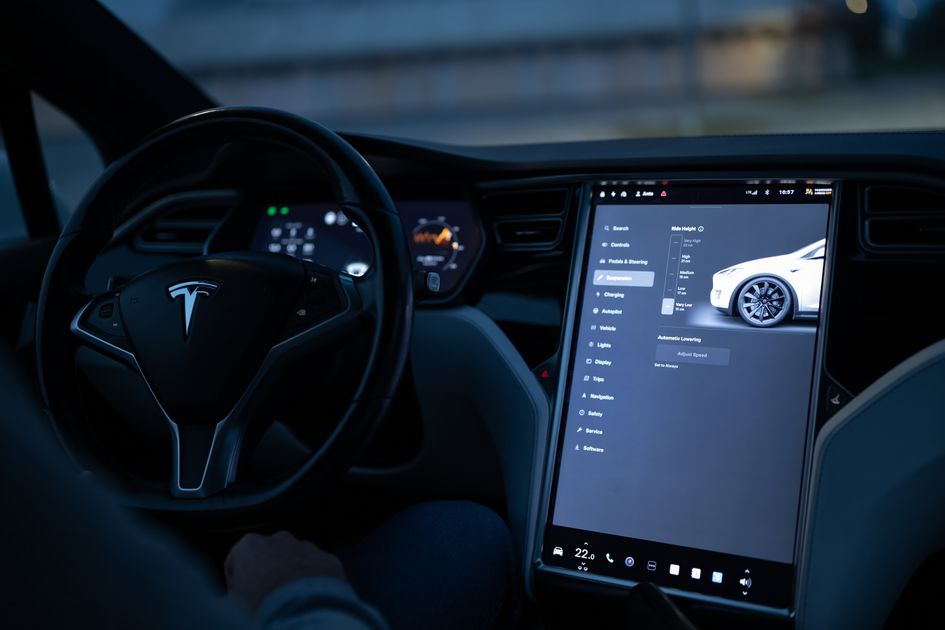
Tesla began rolling out software version 2026.20 on May 30, 2026, delivering a set of privacy, safety, and AI features across all Model S, 3, X, Y, and Cybertruck vehicles. While the update doesn't carry a single flagship headline, the combination of dashcam encryption, parental controls, and an early Grok voice integration represents one of the more substantive over-the-air drops in the spring cycle.
Dashcam Clips Are Now Encrypted
The most privacy-significant change in 2026.20 is dashcam clip encryption. When footage is saved to a USB flash drive, recordings are now encrypted so only the originating vehicle can read them. Owners who want to view clips elsewhere can decrypt via a padlock icon inside the Dashcam app or by visiting dashcam.tesla.com. The feature can be disabled under Controls > Safety > Encrypt Dashcam Recordings for those who prefer the previous workflow.
The move addresses a real-world concern: stolen or lost USB drives containing sensitive footage of addresses, license plates, or personal routines. Fleet operators in particular have asked for this kind of protection.
Parental Controls Land on the Center Screen
Tesla added a dedicated Parental Controls toggle accessible at Controls > Safety > Parental Controls while in Park. Owners can now block Browser, Theater, and Arcade from being accessible in their vehicle — a long-requested feature for households sharing a car with young drivers or passengers.
“You can now block Browser, Theater, and Arcade from your Tesla by going to Controls > Safety > Parental Controls while in Park.” — Tesla 2026.20 official release notes
The implementation is straightforward: no PIN, no secondary account — simply a toggle in the safety menu. That simplicity may draw criticism from parents who want a PIN to prevent overrides, but it covers the most common use case without adding friction for the majority of owners.
Grok Voice: Early Beta, English Only
The highest-profile addition in 2026.20 is the Grok voice assistant, built by xAI. Owners can launch it through the App Launcher, by long-pressing the steering wheel voice button, or by saying “Hey Grok.” The assistant supports navigation queries, location-based reminders (e.g., “remind me to pick up groceries when I’m near home”), and open-ended conversational prompts.
| Feature | Access Method | Requirements |
|---|---|---|
| Grok Voice | App Launcher, long-press voice button, “Hey Grok” | Premium Connectivity or WiFi |
| Location Reminders | Voice command to Grok | Premium Connectivity or WiFi |
| Personality Modes | Settings in Grok app | None |
Tesla's release notes flag the integration as “currently in early Beta” and note it is English-only at launch. Conversations are processed anonymously — Tesla says it does not receive the content of Grok queries. Multiple voice personalities are available, ranging from “Storyteller” to “Unhinged,” mirroring the personality options available in the Grok mobile app.
For drivers who already use Grok on their phones, in-car integration is a natural extension. For owners who haven't used xAI's product, the integration offers a first taste at highway speed — arguably the best proof-of-concept environment for a voice-first AI assistant.
Blind Spot Accent Lights and Security Fixes
Two additional changes round out 2026.20. Blind spot accent lights now turn red when an object is detected in your blind spot while your turn signal is active, or when an approaching vehicle is detected while parked. The visual cue supplements the existing audible warning without requiring the driver to look at the screen.
The update also includes security improvements described as “important security fixes,” without further detail — standard practice for patches addressing vulnerabilities that haven't been publicly disclosed.
The Bottom Line for Tesla Owners
Version 2026.20 won't generate the same buzz as a major FSD version, but its changes are the kind that affect daily ownership in tangible ways. Dashcam encryption is a genuine privacy upgrade. Parental controls add household utility. Grok voice is early-stage, but its in-car debut marks another step in Tesla's broader push to make xAI's technology part of the vehicle experience rather than just a smartphone app.
The rollout started on May 30 and will reach the broader fleet over the following weeks, as Tesla uses a staged distribution to monitor stability before widening the release.
Photo: Tesla touchscreen interior / Pexels