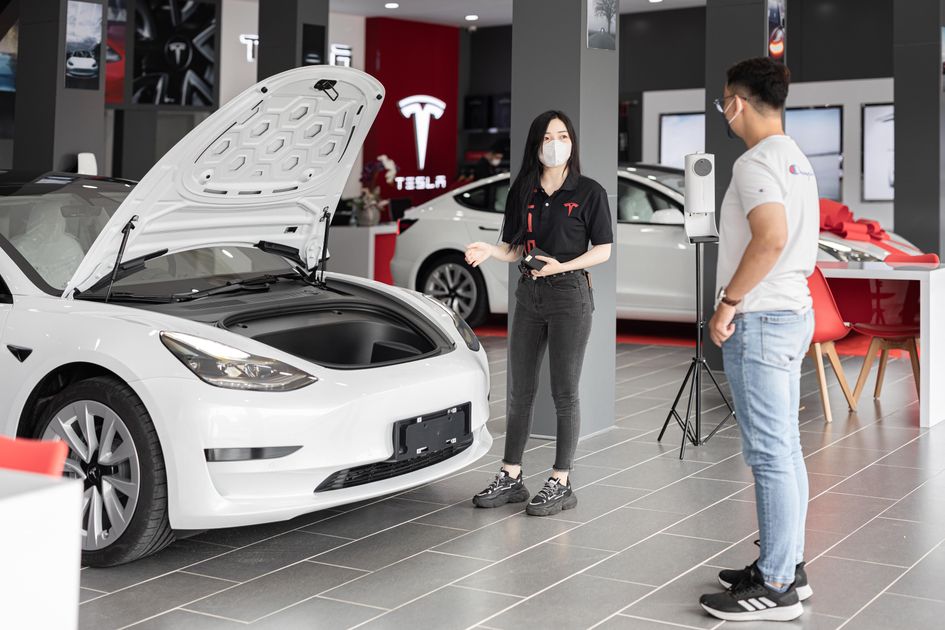
Tesla's two best-selling cars just became home backup generators. On October 6, 2026, Tesla Energy officially expanded Powershare Home Backup to the Model 3 and Model Y — a capability that had been exclusive to the Cybertruck since September 2026. If you own one of these vehicles, have a Powerwall 3, and a compatible Wall Connector, your car can now keep your home running for over two days during a grid outage.
That's not a rounding error. At a household draw of 30 kWh per day — the US average — a fully charged Model 3 or Model Y starting at 90% can sustain your home for more than 48 hours before Tesla recommends recharging. The Cybertruck, with its larger pack, stretches that to over three days.
How Powershare Home Backup Works
Powershare isn't just a cable swap — it's a bidirectional power loop between your car, your Powerwall 3, and your home's electrical panel. When grid power goes out, the Powerwall detects the outage and switches your home to island mode. Your car battery then acts as an extension of the Powerwall, feeding power back through the Wall Connector into the home circuit.
The system requires three pieces of hardware working together:
- Powerwall 3 (mandatory — Powerwall 2 and Powerwall+ support is listed as "coming soon")
- Tesla Gen 3 Wall Connector or Universal Wall Connector
- Model 3 or Model Y ordered on or after October 1, 2026
No additional hardware purchase is needed if you already have a Powerwall 3 and a supported Wall Connector installed. Tesla's app handles configuration and outage switching automatically.
The Numbers That Matter
| Vehicle | Max Continuous Output | Home Backup Duration* |
|---|---|---|
| Model 3 / Model Y | 11.52 kW | Over 2 days |
| Cybertruck | 11.52 kW | Over 3 days |
| Ford F-150 Lightning | 9.6 kW | ~3 days (80 kWh pack) |
*Based on 30 kWh/day household consumption, starting from 90% state of charge.
At 11.52 kW of continuous output, the Model 3/Y matches the Cybertruck's Powershare spec — and surpasses the Ford F-150 Lightning's 9.6 kW by nearly 20%. That output is enough to run a central air conditioner, refrigerator, lights, and phone chargers simultaneously without throttling.
What Owners Are Saying
"Powershare Home Backup is now available for new Model 3 & Model Y with Powerwall 3. Extend your home backup by over 2 days with your vehicle."
— Tesla Energy (@teslaenergy), October 6, 2026
Early adopters on Tesla Motors Club reported successful automatic failover during a brief California grid event on October 9, with cars seamlessly taking over from the Powerwall without any manual intervention required.
The Catch: Hardware Requirements Are Strict
The feature doesn't work with older Powerwalls. Powerwall 2 and Powerwall+ support is promised but not yet live — Tesla says it's "coming soon." This matters because the vast majority of existing Powerwall installations are Powerwall 2 units. Until that update ships, only homeowners who purchased a Powerwall 3 can use the bidirectional feature with their Model 3 or Y.
There's also a vehicle cutoff: your car must have been ordered on or after October 1, 2026 to be eligible. Earlier Model 3 and Model Y vehicles do not have the hardware configuration needed for Powershare Home Backup. Additionally, the feature is currently limited to the United States and Puerto Rico. Model S and Model X are not part of this rollout.
The Bottom Line for Tesla Owners
If you ordered a new Model 3 or Model Y in October 2026 or later and already have a Powerwall 3 on your roof, you just received a meaningful upgrade without spending an extra dollar. Your car now doubles as a home battery reserve — one that can handle a multi-day outage on its own.
For owners on older hardware, the picture is murkier. Powerwall 2 support is coming, but no timeline has been given. If you're considering a new Powerwall installation, the 3 is now the only version that unlocks the full bidirectional stack — not just with your car, but with future Tesla energy products as well. The integration is already tighter than any third-party V2H system on the market, and Tesla's app-based automation means you don't have to think about it when the lights go out.
Photo: Tesla energy / Pexels