On October 14, 2026, Tesla quietly handed a long-awaited gift to owners of older Model S and Model X vehicles: Full Self-Driving (Supervised) v14.3 Lite, delivered through software update 2026.38.5.1. For the first time, cars equipped with Hardware 3 and an Intel Atom GPU — think pre-2022 Model S and X with the original MCU2 processor — received a version of Tesla's latest FSD branch.
AMD Ryzen-powered HW3 cars had already received v14.3 Lite back in September. The Intel cohort, representing a smaller but vocal slice of the Tesla community, had been waiting. Tesla's Super Intelligence account put the milestone plainly:
"Distilled the intelligence from HW4 V14 into HW3."
What's Actually Different About v14.3 Lite?
V14.3 Lite is not a stripped-down afterthought — it is a purpose-built build that backports the core neural network improvements from HW4's V14.3.12 into the older hardware's compute budget. The result is meaningfully better behavior at the moments that matter most to everyday drivers:
| Scenario | V12 Behavior | V14.3 Lite Behavior |
|---|---|---|
| Highway merges | Hesitant, sometimes aborts | Smoother gap acceptance |
| Pedestrian crossings | Occasional phantom brake | Reduced false slowdowns |
| Traffic light stops | Variable stop distance | More consistent positioning |
| Vehicle cut-ins | Late reaction, uncomfortable | Earlier detection, smoother yield |
| Speed management | Speed Profiles on HW4 only | Speed Profiles now on Intel HW3 |
Speed Profiles: SLOTH Is Now on Your Old S or X
The headline feature for Intel HW3 owners is the arrival of Speed Profiles, including the new SLOTH mode introduced earlier this year. Where CHILL takes things easy and STANDARD matches normal flow, SLOTH drops speeds further and makes even more conservative lane choices — useful for tight urban environments or owners who simply want a very relaxed ride.
All four profiles — SLOTH, CHILL, STANDARD, and HURRY — are now accessible on Intel-equipped Model S and X vehicles for the first time. Previously these owners were locked to a single driving behavior regardless of preference.
What Intel HW3 Doesn't Get (Yet)
The honest picture requires noting what AMD Ryzen HW3 owners got that Intel owners did not. Tesla's release notes for 2026.38.5.1 draw a clear line:
- Arrival Options (Parking Lot, Street, Driveway, Pull Over) — AMD HW3 only
- Start Self-Driving from Park — AMD HW3 only
- Autonomous reversing — not available
- Smart Summon — not available
- Halloween Mode — requires AMD Ryzen; all Intel vehicles excluded
The gap reflects a real hardware constraint: Intel Atom processors in older Model S and X units have significantly less compute headroom than the AMD Ryzen chips that replaced them. Tesla has been explicit that this represents the "final major FSD branch" for HW3 before a promised hardware upgrade program arrives.
Early Owner Reports
Within hours of the rollout, owners began sharing results. One owner confirmed the update installed successfully on a 2017 Model X — among the oldest vehicles in the eligible pool — and noted they would test both their car and their spouse's the following day with video. The early consensus: vast improvement over V12, with notably better speed control and reduced wheel nag.
Tesla deployed the update to approximately 1,210 vehicles in the first five minutes, with 36% of that initial batch receiving the HW3 v14.3 Lite build specifically. The rollout is expected to continue widening over the following days.
How to Check If Your Model S or X Qualifies
To confirm your hardware tier, go to Controls → Software → Additional Vehicle Information. Look for "Autopilot computer: Full Self-Driving computer" — if it says HW3 alongside your processor type, you're in the eligible pool. Once 2026.38.5.1 appears in your update queue, the installation process is the same as any other Tesla update: schedule it for overnight or tap Install Now if you're connected to Wi-Fi.
If the update hasn't arrived yet, that's normal. Tesla stages releases in waves over several days to manage server load and catch any edge cases early.
The Bottom Line for Model S and X Owners
For owners who bought a pre-2022 Model S or X and wondered whether their car would ever see a meaningful FSD upgrade, October 14 delivered a real answer. V14.3 Lite is not the full HW4 experience — Arrival Options and Start from Park remain out of reach — but the core driving intelligence has been genuinely updated for the first time in years. Speed Profiles alone change the day-to-day feel of using FSD on these vehicles.
The cars that sparked Tesla's FSD journey are still in the conversation.
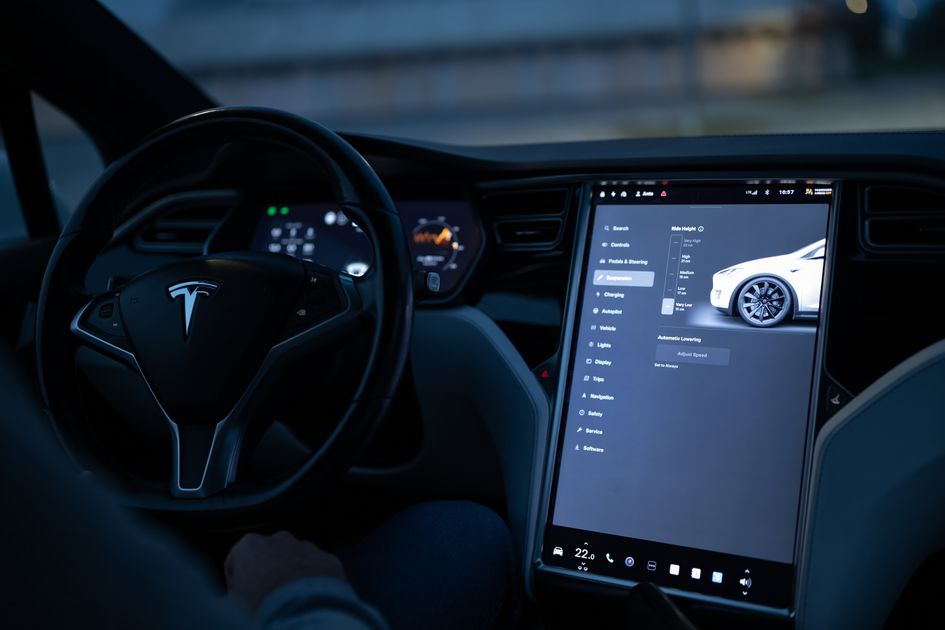
Photo: Tesla touchscreen and FSD visualization / Pexels