Tesla pushed software version 2026.21.6 on August 9, 2026, delivering a substantial update to both Full Self-Driving branches simultaneously. The release packages FSD v14.3.7 for AI4/HW4-equipped vehicles and FSD v14.1 Lite for the older HW3 fleet — and introduces a brand-new driving mode that's already generating discussion among owners: SLOTH, a speed profile described as offering "lower speeds and more conservative lane selection than CHILL."
The update is currently rolling out to early recipients and represents Tesla's most significant simultaneous HW3/HW4 feature release of the summer, following the 2026.26 Summer Update that focused on Grok voice commands and media features rather than FSD capabilities.
SLOTH: A New Speed Profile Below CHILL
Tesla's existing speed profile ladder runs from assertive driving modes down to CHILL, which already favors gentler acceleration and more conservative speeds. SLOTH sits below all of them. According to the 2026.21.6 release notes, the new profile provides not only slower maximum speeds but also more conservative lane selection — meaning the vehicle will prefer center or right lanes and avoid lane changes that CHILL might still make.
The underlying speed logic has also changed. FSD (Supervised) now determines speed based on a three-factor mix:
- Driver profile setting (now with stronger influence on behavior)
- Posted speed limit
- Surrounding traffic conditions
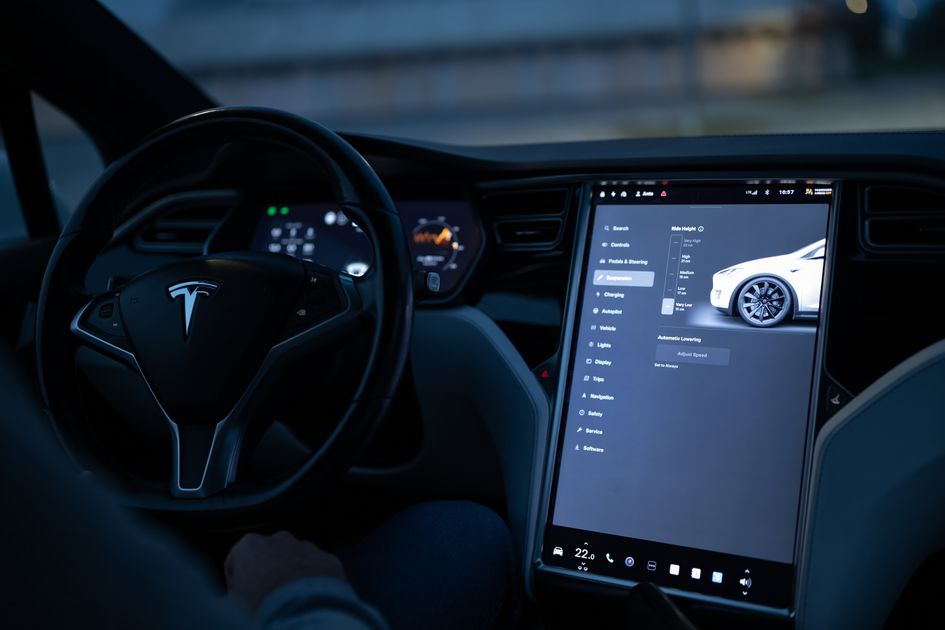
The right scroll wheel, which previously adjusted your maximum speed offset in mph or kph, now directly cycles through Speed Profile settings. Owners can also adjust Speed Profile and Arrival Options directly from the self-driving visualization on the center display — eliminating the need to navigate into settings menus while FSD is active.
"SLOTH: Lower speeds & more conservative lane selection than CHILL." — Tesla 2026.21.6 Release Notes
FSD v14.3.7 Improvements for HW4 Vehicles
The HW4 branch (covering all AI4-equipped Model S, 3, X, Y, and Cybertruck) receives FSD v14.3.7, which builds on the reinforcement learning and neural network improvements from 14.3.6. The headline metric is a 20% improvement in reaction time, achieved through upgrades to the AI compiler and runtime that the release notes describe as a full rewrite using MLIR (Multi-Level Intermediate Representation).
| Feature | HW4 / AI4 | HW3 |
|---|---|---|
| FSD Version | v14.3.7 | v14.1 Lite |
| SLOTH Speed Profile | ✅ | ✅ |
| Reaction Time Improvement | 20% faster | Knowledge transfer gains |
| Parking / Unparking / Reversing | Existing | ✅ New in v14.1 Lite |
| Actually Smart Summon | All models incl. Cybertruck | Not applicable |
| Start Self-Driving from Park | ✅ | ✅ |
| Camera Preview while Driving | ✅ | Limited |
| Unified Summon/FSD/Robotaxi Model | ✅ | — |
Beyond speed, v14.3.7 unifies the neural network architecture across three previously separate use cases: Smart Summon, supervised FSD, and the robotaxi stack. A single model now handles all three scenarios, which Tesla says improves generalization across edge cases that were previously siloed. Emergency vehicle detection and rare object handling also received targeted improvements in this build.
HW3 Gets Parking — A Long-Requested Capability
Owners of older Model 3 and Model Y vehicles with HW3 have long watched HW4 vehicles receive features unavailable on their hardware. FSD v14.1 Lite changes that dynamic meaningfully: the update introduces parking, unparking, and reversing capabilities to HW3 for the first time, using knowledge transferred from the HW4 v14 architecture.
The HW3 update also brings Arrival Options — the ability to select whether FSD should route you to a parking lot, street parking, or your driveway as you approach your destination. And Speed Profiles are now available continuously on HW3, not just in specific scenarios. These additions close a meaningful capability gap between the two hardware generations for owners who haven't yet upgraded their vehicles.
Actually Smart Summon Comes to Cybertruck
One of the more visible additions in 2026.21.6 is the extension of Actually Smart Summon to the Cybertruck. The feature, which allows owners to summon their vehicle from a parking space without being in line-of-sight, now operates on the truck at up to 8 mph — up from the standard 5 mph cap on earlier implementations.
The higher speed limit reflects Tesla's confidence in the system's pedestrian and obstacle detection, and aligns with Cybertruck's use case in larger parking areas like campgrounds, job sites, and off-road staging areas where longer summon distances are common.
The Bottom Line for Tesla Drivers
The 2026.21.6 update is notable for what it accomplishes across two hardware generations at once. SLOTH gives cautious drivers — and riders in autonomous vehicles — a mode that prioritizes margin over efficiency. The HW3 parking capabilities represent a genuine quality-of-life improvement for hundreds of thousands of vehicles that will never receive a hardware upgrade. And the unified neural network model for HW4 suggests that Tesla's robotaxi stack and consumer FSD are now sharing the same underlying foundation, which bodes well for feature parity as unsupervised FSD approaches its promised launch window later in 2026.
Photo: Tesla touchscreen FSD interface / Pexels