Tesla's Full Self-Driving subscriber base has crossed a significant threshold. According to Q2 2026 earnings data released July 22, the company now counts 1.48 million active FSD users globally — a 56% jump year-over-year from 950,000 in Q2 2025, and a gain of 200,000 in a single quarter from Q1 2026's 1.28 million.
The growth reflects a fundamental shift in how buyers approach Tesla's autonomous driving software: it is increasingly expected, not optional.
Subscription Revenue Accelerating Fast
The subscriber count translates directly into recurring revenue. Tesla's annualized FSD recurring revenue reached $791.2 million in Q2 2026, up sharply from $546 million in Q1. At $99 per month, the 666,000 monthly subscribers alone generate roughly $66 million each month — before accounting for new vehicles sold with FSD included upfront.
| Metric | Q2 2025 | Q1 2026 | Q2 2026 |
|---|---|---|---|
| Active FSD Users | 950,000 | 1.28M | 1.48M |
| YoY Growth | — | — | +56% |
| Annualized Recurring Revenue | — | $546M | $791M |
| NA Delivery Attach Rate | ~35% | ~50% | 55% |
| Global Delivery Attach Rate | ~10% | ~14% | 15.2% |
North America: FSD Is Now the Default
The North American attach rate tells the clearest story. In Q2 2026, more than half of all Tesla deliveries in North America — 55% — came with FSD subscriptions active at the time of delivery. That figure was around 35% just a year ago.
This shift matters for Tesla's unit economics. Each FSD-equipped vehicle generates software revenue that compounds over the vehicle's lifetime, independent of whether Tesla sells another car that month. Unlike one-time hardware margin, FSD revenue recurs as long as the driver keeps the subscription active.
The 55/45 Split: Buy vs. Subscribe
Of the 1.48 million active users, 55% purchased FSD outright (typically at $8,000 before various price adjustments) while 45% subscribe at $99 per month. The subscription model has gained ground steadily since Tesla introduced the monthly option in 2021.
"Our sales data suggests one of the main reasons people are coming and looking at the car is because of FSD." — Tesla executive, Q2 2026 earnings call
The subscription model is strategically important: it converts a one-time hardware sale into a software service, creating a recurring revenue stream that Wall Street values with a far higher multiple than automotive gross margin.
What's Driving Adoption in 2026
Three factors are accelerating subscriber growth this year:
1. FSD capability improvements: Version 14 branches — including V14.3.5 and V14.3.7 — have brought measurable improvements to intersection handling, speed profile personalization (including the new SLOTH mode for conservative drivers), and expanded HW3 support for older vehicles. More capable software means fewer cancellations and more new sign-ups.
2. Robotaxi normalization: As Tesla's Cybercab begins limited employee operations at Gigafactory Texas and unsupervised robotaxi service expands across seven major U.S. metros, consumer confidence in autonomous tech grows. The public is seeing Tesla vehicles navigate real roads without human input — and buying FSD to get closer to that experience on their own cars.
3. Price positioning: At $99/month, FSD is priced as a utility service rather than a luxury add-on. For buyers who spend 60+ minutes per day commuting, the per-use cost is lower than most monthly streaming bundles. Tesla has maintained this price point across multiple FSD version transitions.
The Road to $1 Billion ARR
With $791M in annualized recurring revenue at the end of Q2, Tesla is within striking distance of the $1 billion ARR threshold for FSD subscriptions alone. At the current quarterly growth rate of roughly $245M per quarter in ARR, that milestone could arrive by Q4 2026 — or possibly Q3 if attach rates in North America continue climbing.
Tesla's next earnings call is scheduled for October 28, 2026. If subscribers reach 1.7–1.8 million by Q3, the $1B ARR target becomes a near certainty before year-end.
The Bottom Line for Tesla Owners and Investors
Tesla's FSD subscriber numbers are no longer a growth experiment — they represent a maturing software business growing at 56% annually. For existing owners, that trajectory means better software delivered more frequently. For investors, it means an increasingly significant portion of Tesla's revenue is software-margin rather than automotive-margin — a distinction that could reshape how the company is valued as the subscriber base continues to scale.
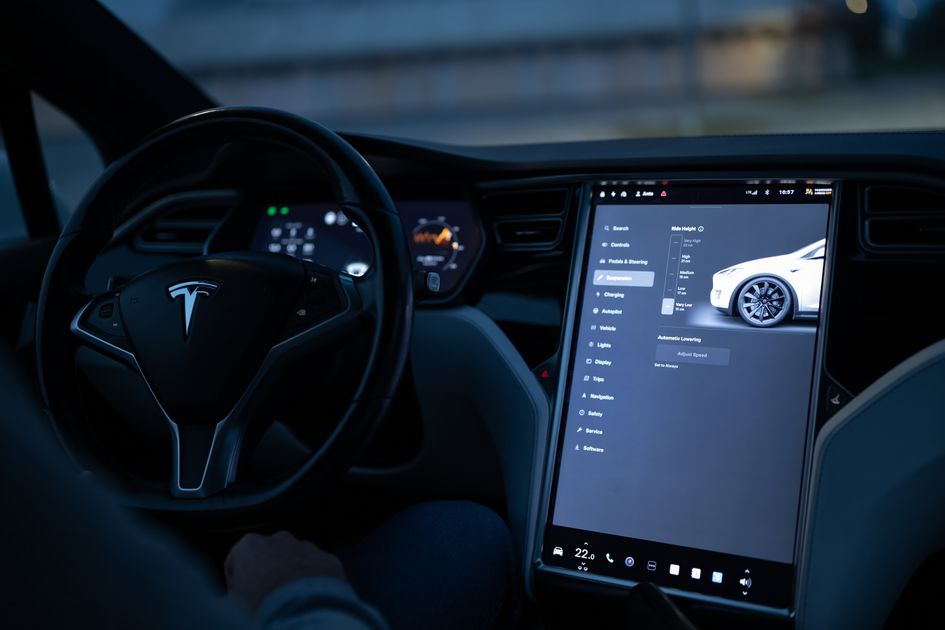
Photo: Tesla touchscreen interface / Pexels